
Blog
Mindful Digest
Written reflections, show notes, and episode companions for the Mindful Chatting podcast — exploring ADHD, trauma, emotional regulation, and self-understanding.
Contempt: The Quiet Relationship Killer
Contempt is one of the most harmful relational dynamics, often developing slowly over time through unresolved emotions and unspoken resentment.
It is characterized by a sense of superiority and emotional distance.
Focus Fatigue: Why You Burn Out Faster Than Other People
Focus fatigue occurs when the brain becomes depleted from sustained cognitive effort, decision-making, and attention regulation.
For individuals with ADHD, this process can happen more quickly due to increased demands on executive functioning systems.
How to Build a Goal (And Break It Into Small Objectives) in Private Practice
Many therapists struggle with growing their practice because their goals are too vague or not broken down into actionable steps.
This episode provides a structured approach to goal setting that focuses on clarity and sustainability.
Divorce Doesn’t End the Pattern (Unless You End the Dynamic)
Ending a relationship does not automatically resolve the underlying dynamics that existed within it.
Many individuals find themselves repeating similar relationship patterns across different partners. This is often due to internalized roles, attachment patterns, and emotional conditioning.
Why You Can’t Focus When You’re Overstimulated
Many individuals with ADHD struggle with focus, not because they lack motivation, but because their brain is overloaded with input.
Overstimulation occurs when too much sensory, emotional, or cognitive input competes for attention at the same time.
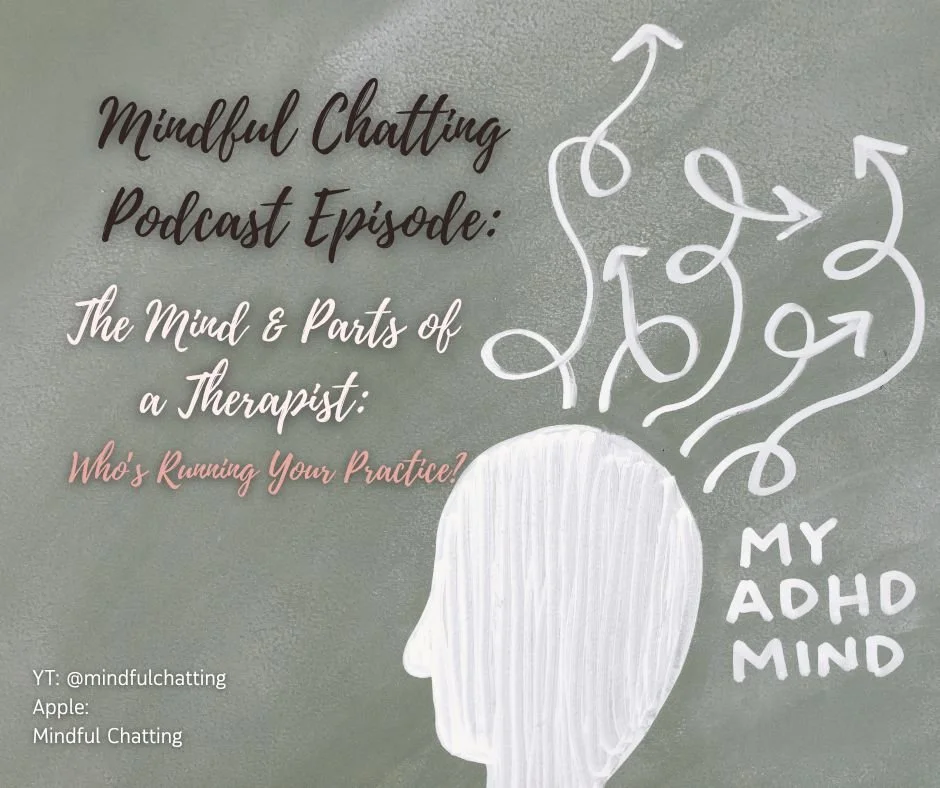
The Mind & Parts of a Therapist: Who’s Running Your Practice?
Many therapists assume that business inconsistency is a strategy problem. However, internal psychological dynamics often play a significant role in how decisions are made.
Parts-based models, such as Internal Family Systems, suggest that individuals have multiple internal “parts” that influence behavior, each with its own role and motivation.
Self-Trust: Why You Don’t Believe Yourself
Self-trust is often misunderstood as confidence or belief in one’s abilities. In reality, self-trust is built through consistent follow-through and internal reliability.
When individuals repeatedly break internal promises, self-trust begins to erode. Over time, this creates resistance, doubt, and difficulty following through on goals.
What Focus Actually Is (And What ADHD Changes)
Focus is often described as a personality trait. Some people are considered naturally focused while others are labeled as easily distracted. However, this perspective oversimplifies what focus actually involves.
Focus is a cognitive skill that relies on attention regulation and inhibition. Understanding these processes can help explain why people with ADHD often experience both intense hyperfocus and difficulty directing attention.
Consultation Saturdays: Using Mind Mapping to Manage Your Practice (Without Overwhelm)
Many clinicians struggle to organize their ideas when running a private practice. Traditional systems like lists and spreadsheets often feel rigid and overwhelming, especially for therapists who naturally think in connections rather than sequences.
Mind mapping offers a visual approach to organizing your practice that aligns with how many clinicians naturally process ideas.
Masculine & Feminine Energy in Relationships (Beyond Gender)
The concept of masculine and feminine energy is often misunderstood. Many people assume it refers to traditional gender roles, but in reality, these dynamics describe how emotional and relational energy moves between partners.
Understanding these patterns can help explain why some relationships feel balanced and supportive while others feel draining or tense.
You Can Only Hold One Thing at a Time: ADHD, Attention, and Emotional Bandwidth
ADHD is often misunderstood as distraction. In reality, it’s about attention regulation and capacity fluctuation.
This episode explores:
The difference between attention and cognitive bandwidth
How emotions reduce executive functioning
Why shutdown happens under overload
Planning based on emotional load
Capacity-aware productivity
Consultation Saturdays: What I’m Learning From My Consultation Project (So Far)
As I’ve worked on a consultation project supporting clinicians considering private practice, several patterns have emerged:
There is limited structured consultation available.
Networking is emphasized over clarity.
Business literacy in healthcare feels elusive.
Risk-aversion increases when structure is unclear.
Many clinicians want the same thing — but don’t know where to begin.
Thoughtful Thursday: Authenticity Isn’t Oversharing — It’s Emotional Alignment
Authenticity is often misunderstood as radical transparency or emotional intensity. In reality, authentic expression requires regulation and safety.
Planning for Hard Days First (Not Ideal Days)
Most planning systems fail because they assume consistent capacity. But executive functioning fluctuates based on stress, sleep, emotional load, and life demands.
Consultation Saturday: Ethics vs Business - Why Clinicians Get Stuck Here
Many clinicians internalize the belief that focusing on money compromises ethics. This episode explores why that belief forms — and how integrating business literacy actually protects ethical care.
Thoughtful Thursday: You Don’t Lack Discipline — You Lack Safety
What if the problem isn’t discipline — but safety?
In this Thoughtful Thursday episode, we explore how nervous system dysregulation often gets mislabeled as laziness, inconsistency, or lack of willpower. Many people try to build consistency on top of internal threat — and then shame themselves when it doesn’t work.
This episode reframes avoidance, procrastination, and burnout through a trauma-informed and attachment-aware lens. Instead of asking, “Why can’t I just be more disciplined?” we explore a deeper question: What feels unsafe here? Because safety precedes consistency.
Dopamine & Anticipatory Motivation: Why Starting Feels So Hard
If you have ADHD, you’ve probably heard:
“Just get started.”
“Stop overthinking.”
“You just need discipline.”
But if starting feels physically hard — like your brain won’t move — that’s not laziness.
It’s neurobiology.
In this episode of Mindful Chatting, we break down the science behind dopamine, anticipatory motivation, and why traditional productivity advice fails ADHD brains.
Consultation Saturday: The First Questions New Clinicians Actually Ask (But Feel Dumb Asking)
Starting or growing a private practice often brings silent doubts. This episode addresses the most common — and least spoken — questions clinicians carry.
Thoughtful Thursday: Accountability Without Right or Wrong
What if accountability didn’t require someone to be wrong?
In this Thoughtful Thursday episode, we explore the psychological difference between shame and responsibility — and why so many of us equate admitting fault with losing safety.
If you find yourself becoming defensive in conflict, over-explaining your behavior, or collapsing into guilt when tension arises, this episode offers a grounded reframe.
Accountability is not about verdict.
It’s about repair.
And repair requires emotional regulation — not self-attack.
Effort Matching: Why Equal Effort Isn’t Fair for ADHD Brains
ADHD increases the internal effort required to initiate, sustain, and complete tasks. Research on executive functioning shows that ADHD brains expend more energy on processes others take for granted.